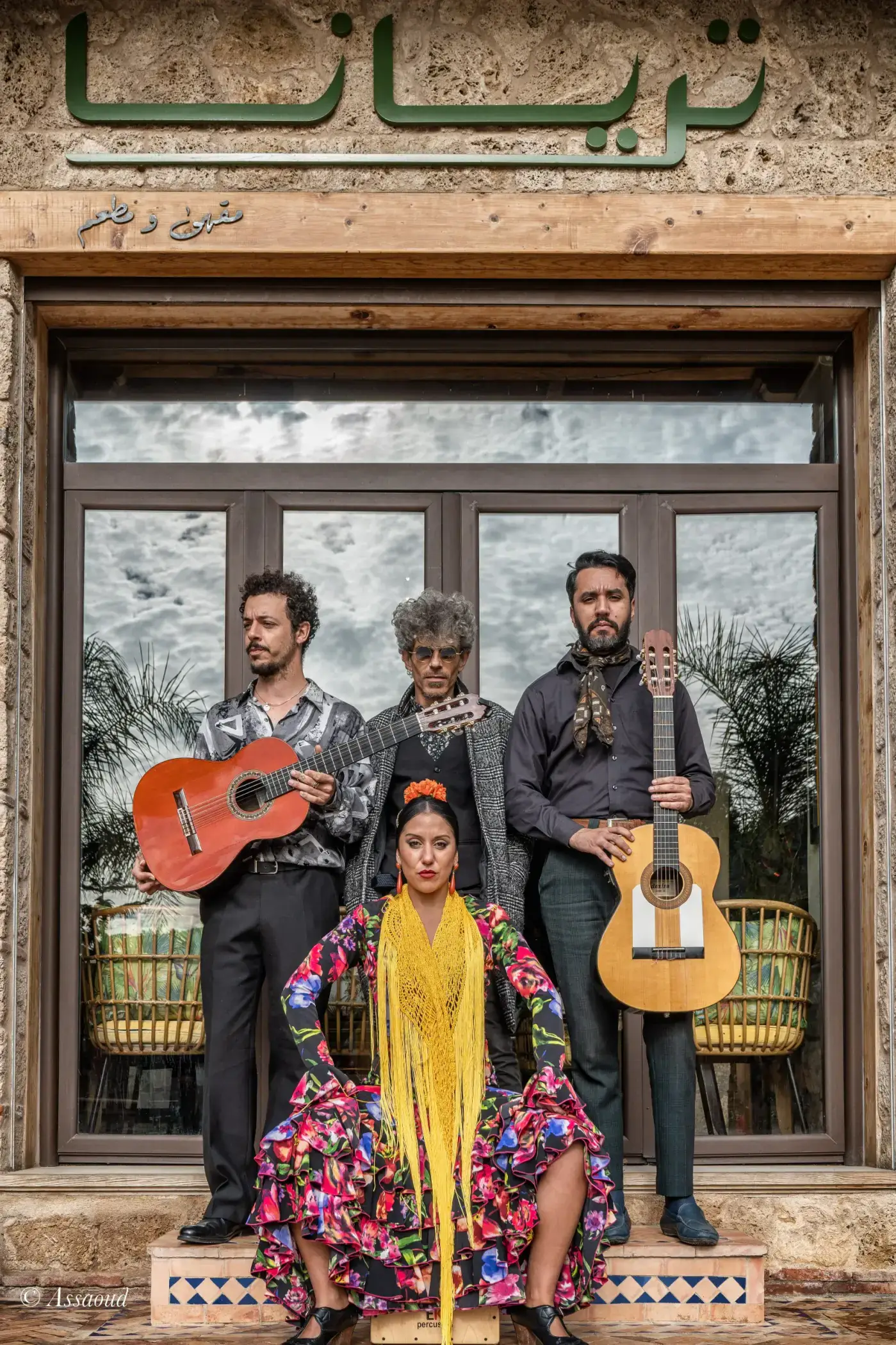
The music of Morocco and southern Spain cannot be understood as two isolated traditions. For centuries, people, poetry, instruments, and melodies crossed between the Iberian Peninsula and North Africa.
That exchange remains audible today—in Morocco’s classical Andalusian orchestras, in flamenco’s emotional intensity, in popular music, and in contemporary performances that bring both shores into the same room.
From Al-Andalus to northern Morocco
After successive migrations from Al-Andalus, communities carried musical knowledge to cities including Tetouan, Fez, Rabat, and Chefchaouen. Melodic modes, poetry, court traditions, and instruments were preserved and reshaped within Moroccan society.
The Moroccan Andalusian nouba
Al-ala, Morocco’s Andalusian classical tradition, is organized around suites known as noubas. Voice, oud, violin, rebab, percussion, and poetic texts create a disciplined musical journey whose tempo gradually develops. It is both an artistic archive and a living performance tradition.
Flamenco and the power of expression
Across the Strait, flamenco grew through a complex encounter of Roma, Andalusian, Arab, Jewish, and local influences. Cante, guitar, dance, handclaps, and jaleo turn rhythm into emotional language. The relationship with Moroccan music is not a simple line of descent, but a long conversation shaped by proximity and shared history.
Modern fusion and Moroccan Hayha
Contemporary artists continue the exchange by combining rock, reggae, gnaoua rhythms, flamenco guitar, electronic sound, and socially engaged lyrics. Bands such as Hoba Hoba Spirit show how Moroccan identity can be modern, critical, joyful, and rooted at the same time.
Hear the connection in Chefchaouen
Chefchaouen is a natural place to experience this musical bridge. Its Andalusian heritage, northern Moroccan identity, blue medina, and proximity to Spain give the music a visible setting. At Triana, live guitar and cultural events extend that history into a contemporary rooftop evening.
Music as a shared memory
Andalusian music is not only a reminder of the past. It is proof that culture grows through movement and encounter. Every performance renews the connection between Morocco and Spain—and invites a new audience to listen.
Discover live music at Triana