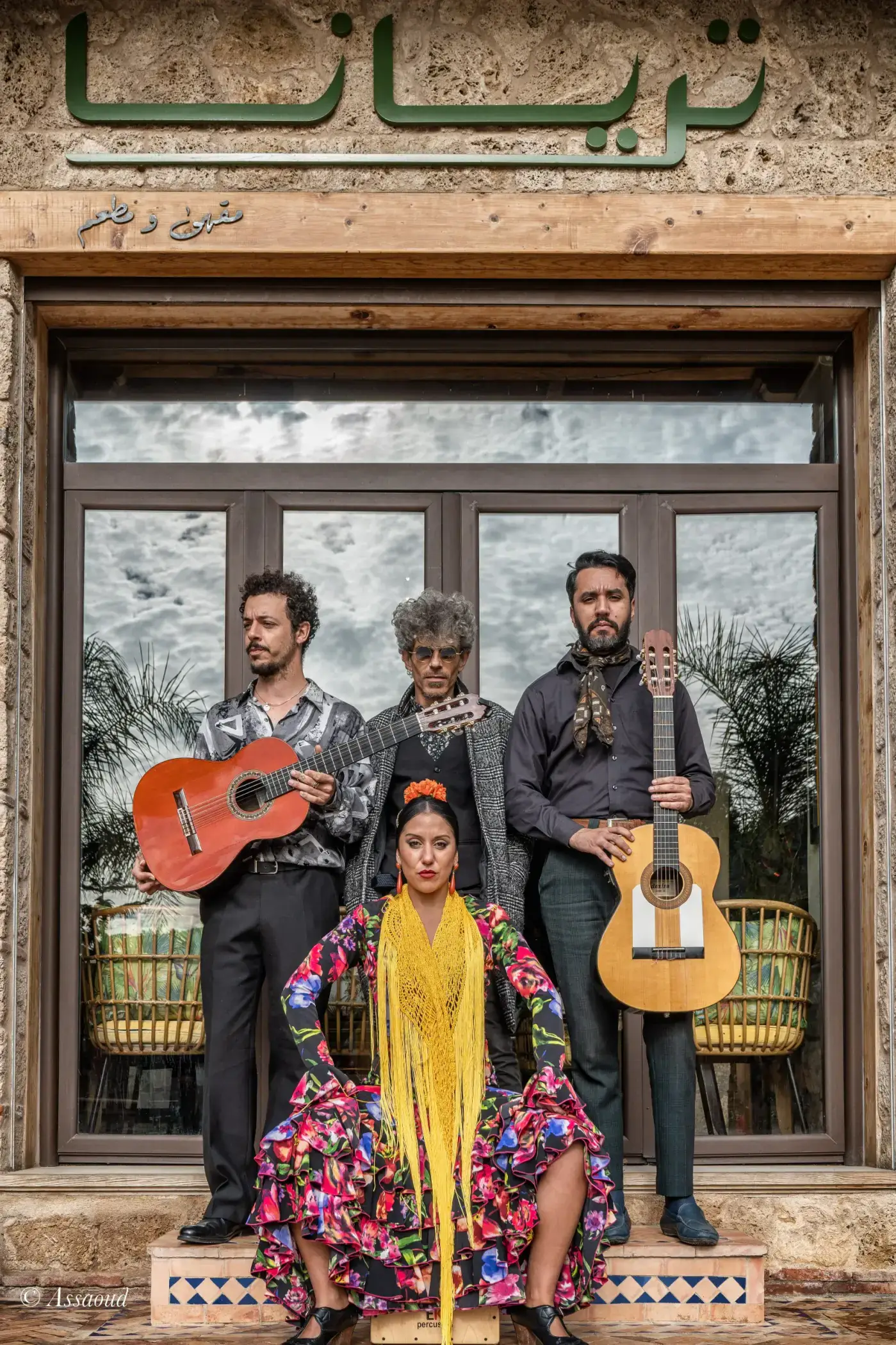
Flamenco Nights at Triana
When Andalusian guitar, song, and dance come to the rooftop of Chefchaouen — an encounter between two cultures that have always shared the same rhythm.
Flamenco was born in Andalusia, but it was born at a crossroads. The Roma, the Moors, the Jews, the Spanish — all of them contributed to its sound, its rhythms, its ache. When it arrives on triana rooftop in Chefchaouen, it does not feel foreign. It feels like it has come home.
Where Flamenco Comes From
Flamenco emerged in Andalusia in the 18th century, but its roots reach back much further. Musicologists trace its rhythmic foundation to the Moorish music of al-Andalus — the complex polyrhythms, the microtonal scales, the emotional directness that characterised Islamic music in the Iberian Peninsula. The call to prayer and the gypsy song are separated by a few degrees of pitch, not by centuries of culture.
The neighborhood of Triana in Seville — from which our restaurant takes its name — was the birthplace of flamenco's most important school. It was a working-class district on the opposite bank of the Guadalquivir, home to Roma families, potters, sailors, and the descendants of Moors who had stayed after 1492. From their shared grief and joy came the most emotionally charged music Europe has ever produced.
A Night at Triana
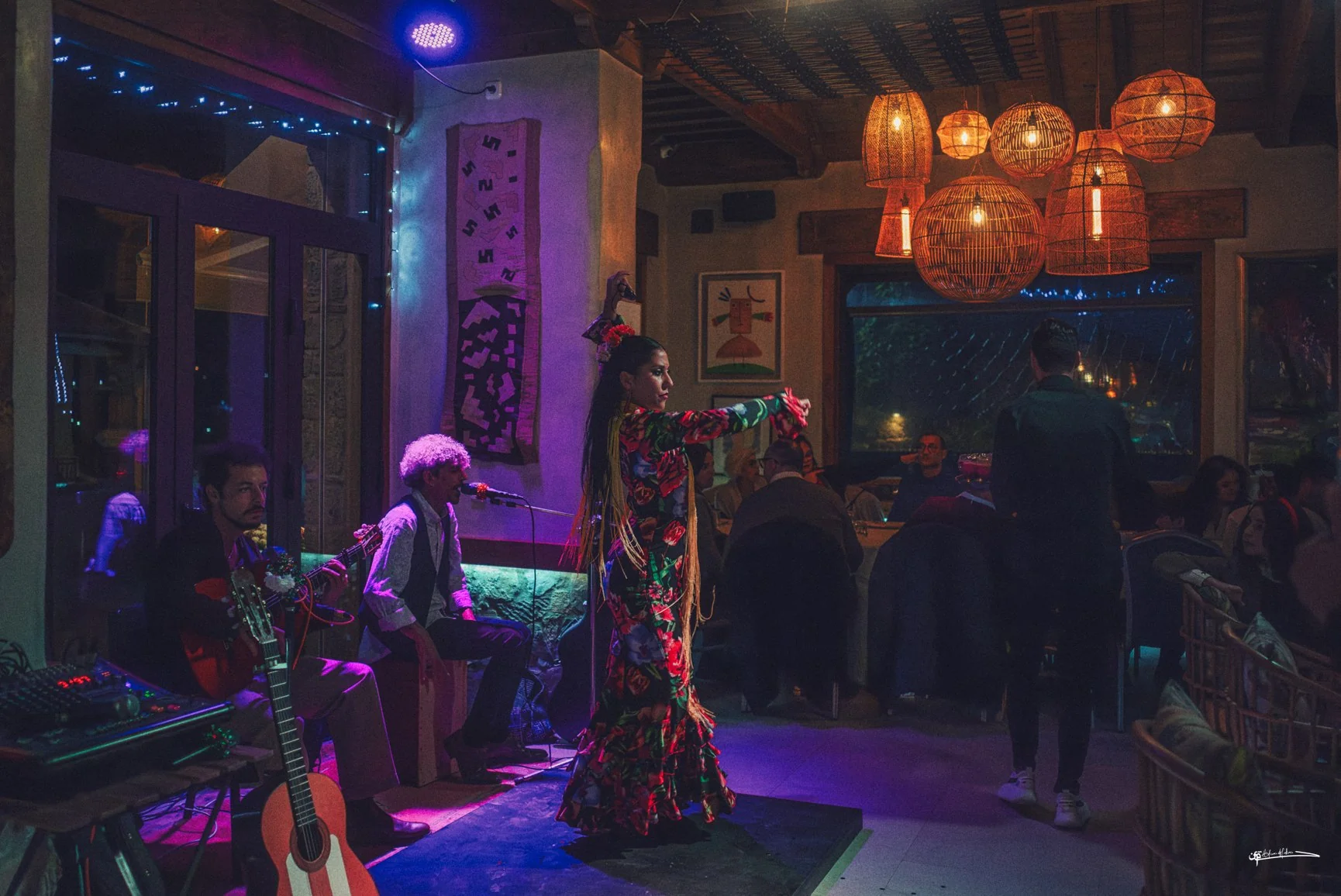
On flamenco evenings at Triana, the rooftop terrace is set with candlelight and lanterns. The guitars arrive first — a measured, almost private warmup that gradually fills the space. Then the singer, whose voice carries a quality of raw honesty that stops conversation cold. Then the dancer, whose feet speak the rhythm that the guitar has been laying down.
The Rif mountains form the backdrop. The blue medina glows below. The sound carries over the rooftops in the night air with a clarity that no indoor venue can replicate. Guests who have seen flamenco before say they have never felt it the same way as on a Moroccan rooftop, in a city that Andalusian refugees once called home.
The evening includes dinner from the full menu, curated drinks from our bar, and a performance that typically runs 45 to 60 minutes, with music continuing in a more intimate register through the rest of the night.
The Sound of Two Shores
What makes triana flamenco evenings different from seeing flamenco anywhere else is the location. Chefchaouen was founded by Andalusian refugees — people who crossed the Strait carrying not just their possessions, but their music. The north Moroccan musical tradition — the chaabi, the gharnati, the mawwal — all carry echoes of the same Moorish Iberian source.
When flamenco plays at Triana, it is not a performance imported from abroad. It is a conversation with the city itself — a recognition that the music on both sides of the Strait has always been a reply to the same original call.
Practical Information
When
Flamenco evenings are programmed periodically throughout the year. Check the events page for upcoming dates.
Reservations
Flamenco evenings fill quickly. Reserve your table in advance to guarantee your seat on the terrace.
Private evenings
Flamenco can be arranged for private events, corporate dinners, and exclusive celebrations. Contact us to discuss your occasion.
What is included
Full dinner menu, drinks from the bar, and the flamenco performance. Private events can be tailored to your programme.
Reserve your flamenco evening
Book your table for an upcoming flamenco night at Triana — or enquire about organising a private flamenco evening for your group.