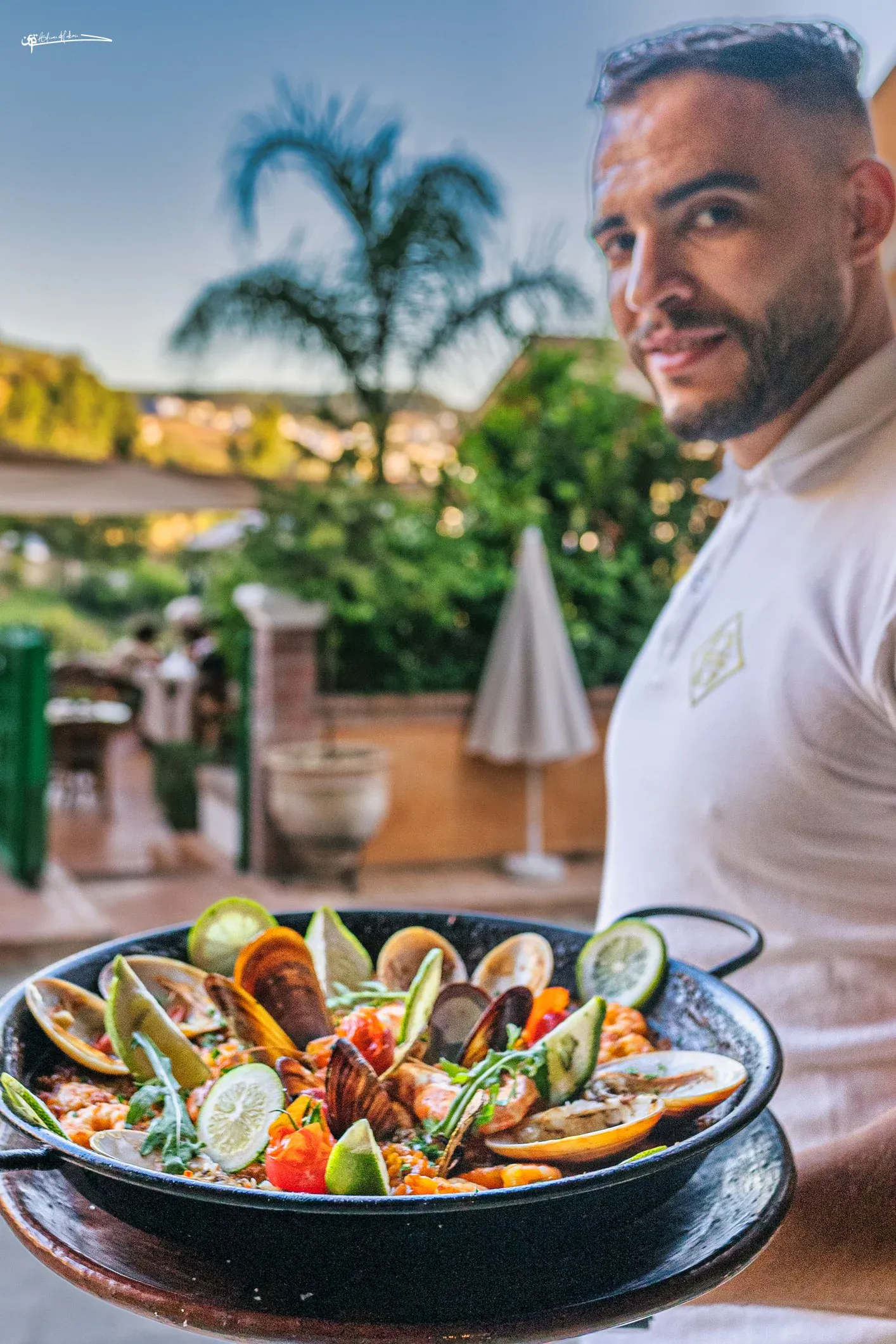
The Secrets of the Moroccan-Andalusian Paella
How a Valencian icon crossed the Strait and was transformed by Atlantic seafood, Moroccan saffron, and the altitude of the Rif.
The paella that arrives at your table at Triana is not the paella you know. It carries within it two centuries of shared culinary history between the Iberian Peninsula and the Maghreb — a dish that crossed the Strait of Gibraltar and was quietly transformed by the land, the sea, and the mountain spices of northern Morocco.
A Dish Born on Two Shores
Paella was born in the rice fields of Valencia's Albufera lagoon, cooked by farmworkers over orange-wood fires. What history often forgets is that the Moors who cultivated these lands for nearly eight centuries left their deepest mark not in architecture, but in agriculture. They introduced rice cultivation to the Iberian Peninsula. They brought saffron from Persia through the Maghreb, planting it in the plains of Castile and La Mancha.
The paella we celebrate today carries a profoundly Moorish soul. The saffron is Moorish. The rice is Moorish. The slow, fragrant sofrito — the aromatic base of the dish — draws its logic from a kitchen culture that treated patience as the first ingredient. At Triana, we honour that origin.
The Atlantic Ingredient
At Triana, our paella begins with hand-selected seafood from Morocco's Atlantic coast — clams with a briny mineral intensity, mussels heavy with the smell of the open sea, and seasonal vegetables from the Rif market. The sofrito is built slowly: Moroccan sweet peppers reduced over low heat with olive oil and tomato until the pan fills with a deep, caramelised fragrance.
Then comes the saffron — Moroccan saffron, harvested in Taliouine, three hours south of Chefchaouen — added to the broth as a single generous pinch that colours everything amber gold. This is not a substitute for Spanish saffron. It is a different expression of the same plant, grown in a different soil, with a slightly deeper, earthier tone that suits the mountain air of the Rif.
The Josper Finish
The secret of a great paella is the socarrat — the caramelised crust of rice that forms at the base of the pan over high direct heat. It is the final test of technique, the mark that separates a properly executed paella from a mere rice dish.
At Triana, the paella is finished on the Josper wood-fired grill, which delivers a smoky intensity that no gas hob can replicate. Those last two minutes over wood fire are where the dish becomes ours. The smoke is subtle — enough to suggest the open fire without overwhelming the saffron and the sea.
Why the Rif Changes Everything
The altitude of Chefchaouen — 600 metres above sea level — and the mineral-rich water of the Rif mountains create a subtly different cooking environment than the Mediterranean coast. Rice absorbs differently here. Saffron blooms more slowly, releasing its fragrance in layers rather than all at once.
The result is a paella with more depth, more textural contrast, and a longer finish on the palate. A dish that, in this precise form, only exists here — in this kitchen, at this altitude, with these ingredients, cooked over this fire. That is the Moroccan-Andalusian paella. That is Triana.
Come taste it yourself
Reserve your table on the rooftop terrace. Explore the full menu before you arrive, or browse the gallery to see the kitchen in action.